
A wedding timeline can unravel quickly when transport isn’t planned properly. I’ve seen guests miss the start of a ceremony because they couldn’t find parking, and I’ve watched family members arrive flustered after getting lost on unfamiliar Melbourne roads. Most couples focus on venues, menus, and styling first, but transport plays a bigger role than many realise.
Whether you’re arranging wedding shuttle bus hire in Melbourne, managing parking at a wedding venue, or organising wedding transport for guests travelling from interstate, a clear transport plan helps keep the day running smoothly from beginning to end.
Why Guest Transport Can Make or Break Your Wedding Day
Most wedding guests will remember three things: the atmosphere, the food, and how easy the day felt. Transport plays a bigger role in that experience than many couples realise.
When guests arrive relaxed and on time, everything flows naturally. The ceremony starts as planned, photos stay on schedule, and the reception begins with the right energy. On the other hand, transport problems can create a domino effect that impacts the entire celebration.
This becomes even more important for Melbourne weddings. Traffic conditions can change quickly, particularly on Friday afternoons, public holiday weekends, and during major sporting events. A journey that normally takes 20 minutes can suddenly stretch much longer.
The Hidden Costs Of Poor Transport Planning
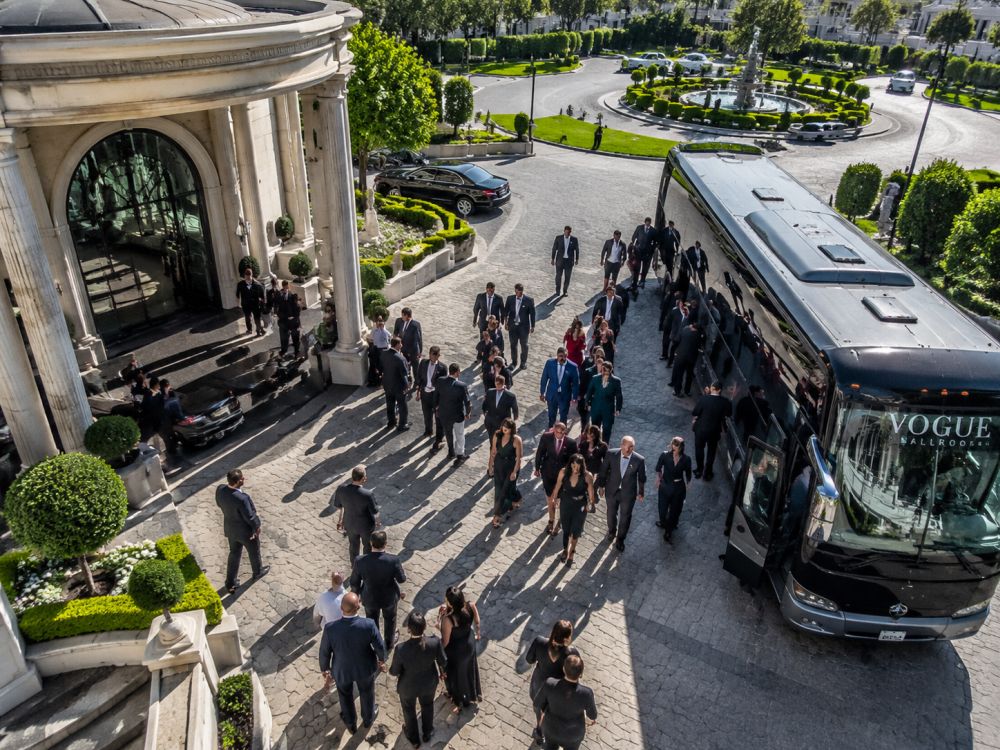
Transport issues don’t just create inconvenience. They often affect other parts of the wedding day.
Some common problems include:
- Guests arriving after the ceremony begins
- Delays to the bridal party schedule
- Congestion at venue entrances
- Overflow parking issues
- Guests leaving the reception early
- Safety concerns after alcohol service
I remember speaking with a couple whose ceremony was scheduled for 4:00 pm. Several guests relied on rideshares to reach the venue. Unfortunately, a large AFL match at the MCG caused heavy demand across Melbourne. Drivers were scarce, wait times increased, and a number of guests arrived after the ceremony had started.
Nobody wants loved ones missing such an important moment. “A smooth arrival often sets the tone for the entire celebration.”
A Real Melbourne Wedding Where Transport Became The Biggest Challenge
One couple I worked with had guests travelling from interstate, regional Victoria, and several Melbourne suburbs. Their reception venue was located away from major public transport routes.
Initially, they planned to let guests organise their own travel.
A few months before the wedding, they realised the logistics were becoming complicated. Many guests were staying in the same CBD hotel, while others had concerns about parking availability near the venue.
The solution was a dedicated shuttle service.
| Transport Solution | Outcome |
| Hotel shuttle service | Guests arrived together and on time |
| Designated return services | Guests stayed longer at the reception |
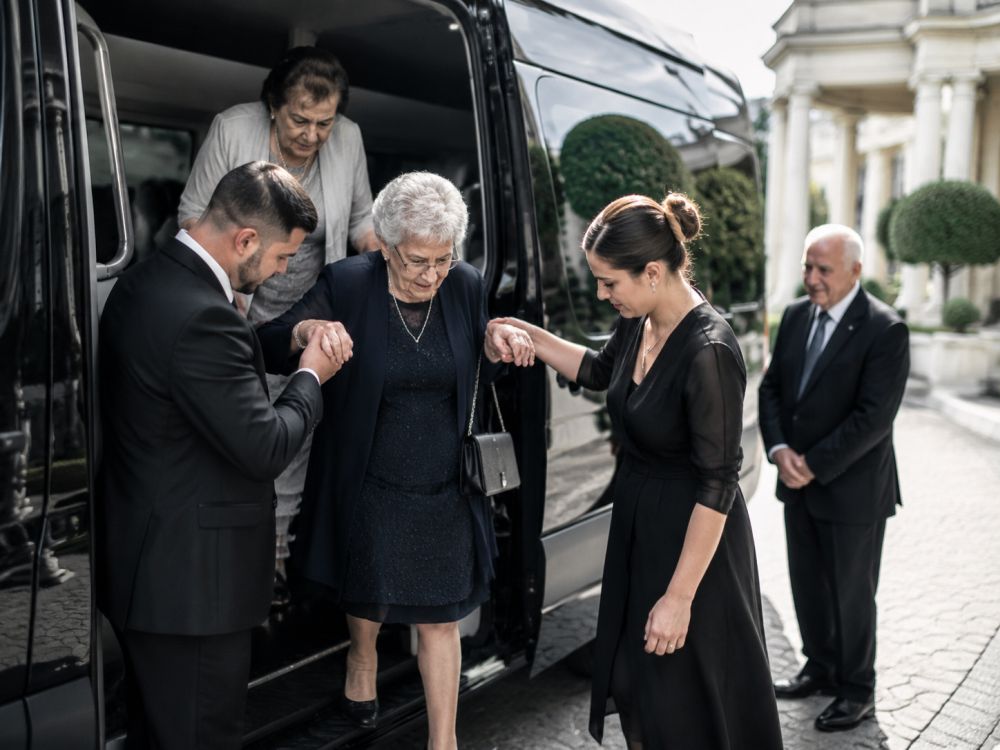
| Reserved parking spaces | Easier access for elderly family members |
The transport budget represented only a small percentage of their overall wedding spend, yet it solved one of the biggest risks on the day.
Who Actually Needs Wedding Transport?
One of the most common questions I get is whether every guest needs organised transport.
The answer is usually no.
A targeted approach often works best. Instead of providing transport for everyone, focus on guests who are most likely to benefit from it.
Create Your Priority Transport List Before Booking Vehicles
Start by identifying guests who may face challenges travelling independently.
These groups often include:
- Interstate visitors
- International guests
- Elderly relatives
- Wedding party members
- Guests staying at hotel blocks
- Guests unfamiliar with Melbourne
For example, if many guests are staying near Melbourne’s CBD and your venue is located in the outer eastern suburbs, wedding shuttle bus hire in Melbourne can remove a significant amount of stress.
How Many Shuttle Seats Do You Really Need?
Many couples make the mistake of booking transport based on total guest numbers.
A better approach is to estimate actual demand.
Consider:
- Hotel block bookings
- RSVP responses
- Public transport access
- Guest travel plans
- Family carpool arrangements
I generally recommend adding a 10–15% buffer. If you expect 70 guests to use a shuttle service, plan for around 80 seats. Last-minute changes happen regularly in the weeks leading up to a wedding.
Wedding Guest Transport Planning Checklist
Before requesting transport quotes, work through this simple checklist:
- Finalise guest numbers
- Confirm accommodation locations
- Estimate transport demand
- Review venue access requirements
- Request multiple transport quotes
- Build a draft transport timeline
- Allocate contingency seating
- Communicate transport details early
Completing these steps before booking suppliers will make organising wedding transport for guests much easier.
Wedding Shuttle Bus Hire Melbourne: Choosing The Right Vehicle
Not all wedding transport is created equal. The best option depends on your guest numbers, venue location, and how far people need to travel.
I’ve seen couples hire a large coach when a minibus would have done the job perfectly. I’ve also seen weddings scramble to organise extra transport because they underestimated demand. The key is matching the vehicle to the situation.
When Large Coaches Are The Smartest Option
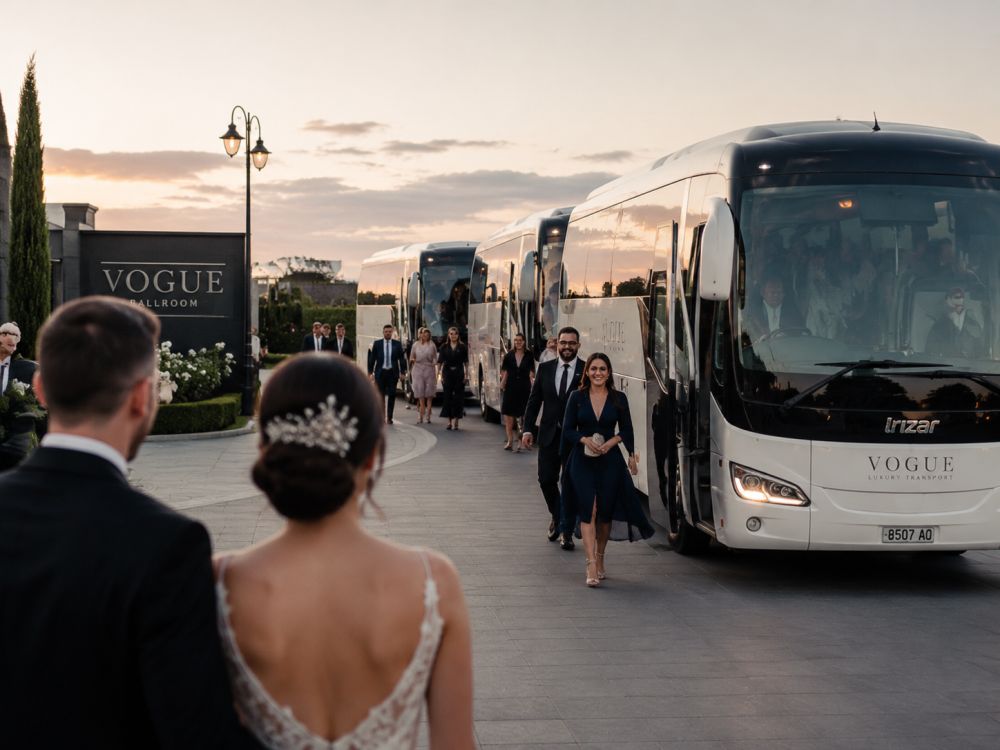
Large coaches are usually the most cost-effective solution for weddings with bigger guest lists. Most coaches accommodate between 50 and 63 passengers, making them ideal for transporting guests from hotels to the ceremony or reception venue.
Benefits include:
- Lower cost per guest
- Fewer vehicle movements
- Easier coordination
- Guests arrive together
- Reduced parking demand
For weddings with more than 150 guests staying in the same accommodation precinct, coaches often provide the simplest solution.
Why Minibuses Work Better For Smaller Weddings
Minibuses are popular for Melbourne weddings held at boutique venues, wineries, and locations with restricted access.
Many Yarra Valley venues, for example, have winding roads and limited parking areas where smaller vehicles are easier to manage.
A minibus can be a practical option when:
- Guest numbers are under 30
- Multiple pickup locations are required
- Venue access is limited
- Transport is only needed for selected guests
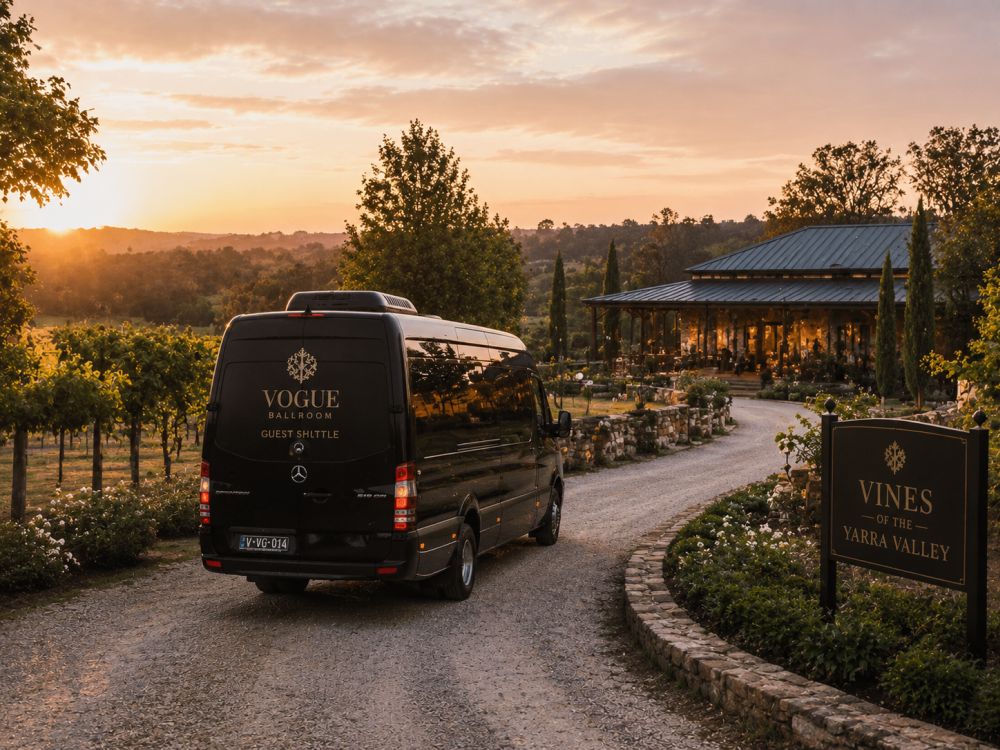
Their flexibility makes them a favourite choice for smaller celebrations.
Premium Vans And Luxury Transport For VIP Guests
Sometimes a full shuttle service isn’t necessary.
Luxury vans and premium people movers work well for:
- Parents of the couple
- Grandparents
- The bridal party
- Interstate VIP guests
- Suppliers requiring transport between locations
One Melbourne couple arranged a luxury van specifically for elderly relatives travelling between the ceremony and reception. It was a small gesture, but it made the day significantly easier for family members with mobility concerns.
Questions To Ask Before Hiring A Wedding Shuttle Company
Before signing a contract, ask these questions:
- What is included in the quoted price?
- Are tolls included?
- Are fuel surcharges additional?
- Is overtime charged?
- What is the minimum hire period?
- Are backup vehicles available?
- How late can departure times be adjusted?
- Is there a dedicated contact person on the day?
The cheapest quote is not always the best value. Reliability matters far more when your wedding timeline depends on transport arriving exactly when promised.
Building A Wedding Transport Timeline That Actually Works
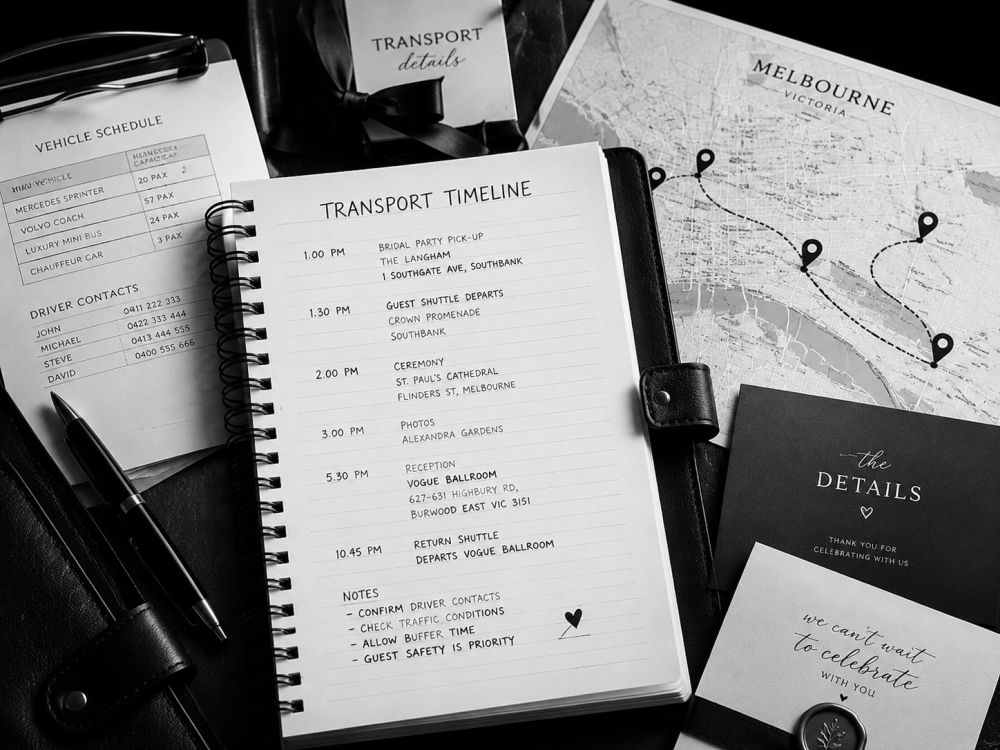
A transport plan is really a second wedding timeline.
Many couples build their schedule around the ceremony and reception but forget to work backwards from guest arrival times. That’s where problems often begin.
A well-planned transport timeline creates breathing room and helps avoid unnecessary pressure on the day.
The Formula Professional Wedding Planners Use
When planning transport, start with the ceremony time and work backwards.
A simple example looks like this:
| Activity | Time |
| Ceremony Starts | 4:00 pm |
| Guests Seated | 3:45 pm |
| Guest Arrival Window | 3:15 pm – 3:45 pm |
| Shuttle Arrival | 3:15 pm |
| Shuttle Departure | 2:30 pm |
This approach gives guests time to settle in, greet family members, and find their seats without rushing.
Why You Should Add A 20% Time Buffer
One lesson I’ve learned from Melbourne weddings is that traffic rarely behaves exactly as expected.
Roadworks, sporting events, weather conditions, and weekend congestion can all impact travel times.
As a rule, I recommend adding a 20% buffer to every transport estimate.
For example:
| Expected Travel Time | Recommended Planning Time |
| 20 minutes | 24 minutes |
| 30 minutes | 36 minutes |
| 45 minutes | 54 minutes |
Those extra minutes can be the difference between a calm arrival and a stressful one.
Sample Wedding Shuttle Schedule For A Melbourne Reception
A typical shuttle schedule may look like this:
| Activity | Time |
| First Hotel Pickup | 2:15 pm |
| Second Hotel Pickup | 2:45 pm |
| Final Guest Arrival | 3:30 pm |
| Ceremony Begins | 4:00 pm |
| Early Return Shuttle | 9:30 pm |
| Final Return Shuttle | 11:45 pm |
This structure works particularly well when guests are staying at one or two accommodation locations.
Parking At Wedding Venue: What Couples Often Forget
Parking rarely appears on a wedding planning checklist until the final weeks before the event. By then, changing venue logistics can be difficult.
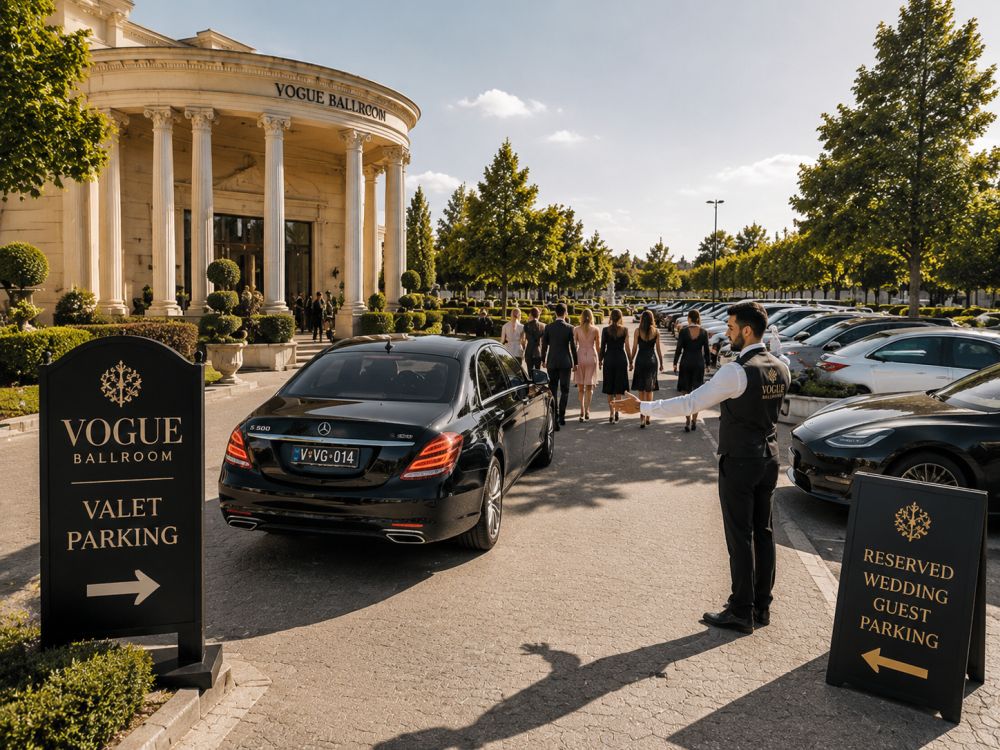
I’ve noticed that guests tend to remember two things about arriving at a venue: how easy it was to find and how easy it was to park. If either becomes frustrating, it can affect their mood before the celebration even begins.
That’s why parking deserves just as much attention as transport.
How Much Parking Does Your Venue Really Need?
A common mistake is assuming every guest arrives in a separate vehicle.
In reality, many guests travel together. Parents often carpool with adult children. Friends travelling from the same suburb frequently share rides. Couples naturally arrive together.
A rough estimate is:
| Guest Count | Estimated Vehicles |
| 80 Guests | 35–45 Vehicles |
| 120 Guests | 50–70 Vehicles |
| 180 Guests | 75–100 Vehicles |
| 250 Guests | 100–140 Vehicles |
Always confirm parking capacity with your venue and ask whether overflow parking is available nearby.
Reserved Parking Spaces Every Wedding Should Have
Not all parking spaces should be available on a first-come basis.
I recommend reserving spaces for:
- Elderly relatives
- Guests with mobility requirements
- Parents and grandparents
- Key suppliers
- Bridal party vehicles
At larger weddings, reserving six to ten spaces close to the entrance can make a significant difference for guests who may struggle with longer walks.
Signage, Traffic Flow And Arrival Management
Good signage solves problems before they happen. Guests should never need to guess where they are going.
Useful signage may include:
- Entrance signs
- Overflow parking directions
- Accessible parking markers
- Ceremony location signs
- Reception entrance signs
For larger celebrations, parking attendants can help keep traffic moving smoothly and prevent bottlenecks at busy arrival times.
Accessibility Considerations Many Couples Miss
Accessibility is often overlooked until a family member raises a concern.
Before your wedding, check:
- Wheelchair access points
- Lift availability
- Ramp access
- Accessible bathrooms
- Distance from parking to reception areas
For venues with long walkways or expansive grounds, golf cart transfers can provide a simple solution.
I’ve seen this work particularly well at larger Melbourne properties where guests would otherwise face a lengthy walk between the car park and reception space.

Rideshares, Uber And Carpooling: Flexible Transport Options For Modern Weddings
Not every wedding requires a fleet of buses. Sometimes rideshares and carpooling can fill the gaps and provide guests with more flexibility. These options work best when supported by a clear plan.
Are Uber And Rideshares Reliable For Melbourne Weddings?
For inner-city weddings, rideshares are usually easy to access.
For regional venues, the situation can be very different.
Driver availability may be limited, particularly after midnight or during major Melbourne events.
Before relying on rideshares, consider:
- Venue location
- Local driver availability
- Reception finish time
- Nearby accommodation options
If your venue sits more than 30 minutes from a major urban centre, dedicated transport is often the safer choice.
How To Set Up A Dedicated Rideshare Drop-Off Zone
One problem I frequently see is rideshares competing for space with guest vehicles, shuttle buses, and suppliers.
A dedicated pickup and drop-off area helps avoid confusion.
The designated area should:
- Be clearly signed
- Allow vehicles to enter and exit safely
- Sit away from shuttle loading zones
- Be easy for guests to locate at night
A little planning here prevents traffic chaos later in the evening.
Can Carpooling Save Money Without Affecting Guest Experience?
For smaller weddings, absolutely.
Carpooling works particularly well when:
- Guests are travelling from similar locations
- Accommodation is spread across Melbourne
- Transport budgets are limited
- Sustainability is a priority
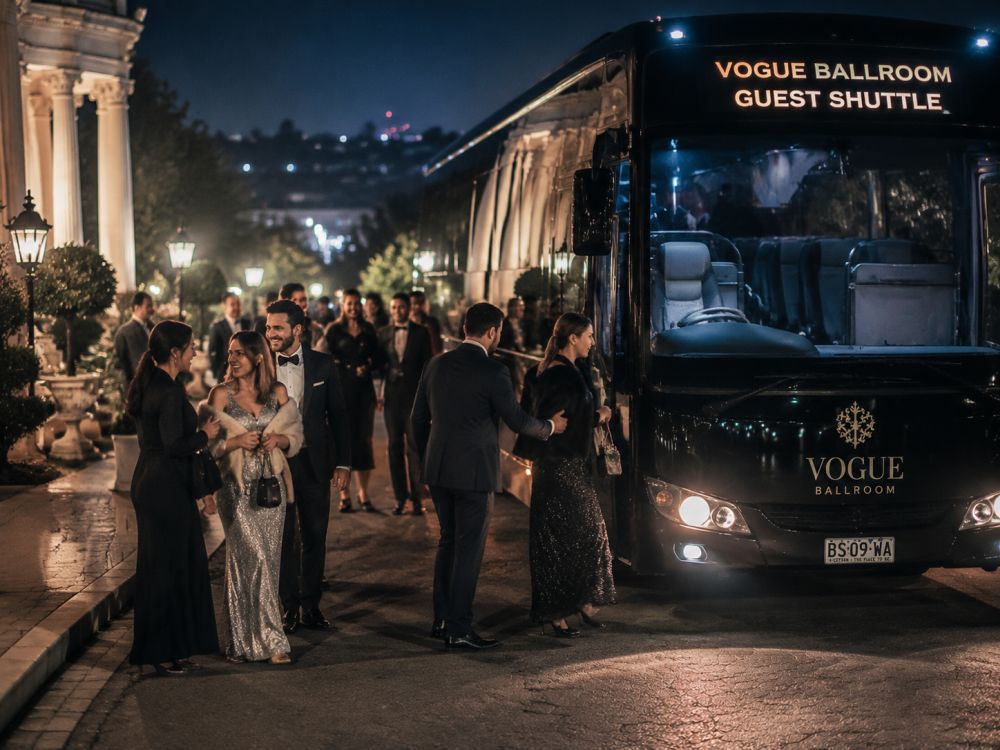
Some couples create simple guest transport groups through their wedding website or RSVP system. Guests often appreciate the opportunity to share travel arrangements, especially when attending from interstate or regional Victoria.
Managing Guest Communication Before The Wedding
Even the best transport plan can fall apart if guests don’t know where they’re supposed to be.
I’ve seen couples spend thousands on transport only to receive phone calls on the wedding morning asking where the shuttle leaves from or whether parking is available.
Clear communication removes confusion and reduces last-minute stress for everyone involved.
Where To Share Transport Information So Nobody Misses It
Don’t rely on a single source of information.
Guests absorb information differently, especially when they’re juggling travel plans, accommodation bookings, and wedding schedules.
I recommend including transport details in:
- Wedding websites
- RSVP confirmations
- Accommodation welcome packs
- Digital invitations
- Pre-wedding emails
A simple transport summary can include:
| Information | Details Guests Need |
| Shuttle pickup location | Exact address |
| Departure time | When to arrive |
| Parking instructions | Entry points and fees |
| Rideshare zone | Pickup and drop-off location |
| Emergency contact | Transport coordinator details |
The easier you make it for guests, the fewer questions you’ll answer during the final week.
The One Person Who Should Control Wedding Day Transport
One rule I always share with couples: you should never be the transport coordinator on your wedding day.
You’ll already have enough happening.
Instead, appoint a dedicated transport contact.
This could be:
- Your wedding planner
- Venue coordinator
- Best man
- Maid of honour
- Trusted family member
Provide them with:
- Driver names
- Vehicle details
- Contact numbers
- Passenger lists
- Pickup schedules
When transport questions arise, guests know exactly who to contact.
Using Live Maps And GPS Pins To Prevent Guest Confusion
Modern technology has made transport coordination much easier.

For venues with multiple entrances or large grounds, sharing a GPS pin can prevent guests from ending up in the wrong location.
This is particularly useful for:
- Winery weddings
- Private estates
- Large reception venues
- Regional properties
A precise pickup or parking pin often eliminates the “We’re here, but where do we go?” phone call. Guest transport isn’t the most glamorous part of wedding planning, but it may be one of the most important.
A well-organised transport plan helps guests arrive comfortably, reduces parking headaches, and allows everyone to focus on celebrating.
I’ve seen first-hand how a simple shuttle service, clear parking instructions, or a dedicated rideshare area can transform the guest experience.
When guests can move between locations without stress, the entire day feels more relaxed. That’s exactly how a wedding should feel.