When it comes to wedding ceremonies, couples often seek a way to make their vows truly unique and meaningful. While exchanging rings is a traditional symbol of commitment, many are looking for something that speaks to their deeper connection. Enter handfasting — a centuries-old ritual making a comeback in modern weddings, often performed at a beautiful wedding ceremony venue Melbourne couples choose for a memorable and personalised ceremony.
Rooted in Celtic and Northern European traditions, handfasting involves binding your hands together with cords or ribbons, symbolising the union of two lives into one. It’s where the phrase “tying the knot” originates, and it’s more than just a physical act; it’s a moment of deep emotional significance. Whether you’re drawn to its historical roots, spiritual meanings, or simply the beauty of its symbolism, handfasting offers a truly personal way to celebrate your commitment.
In this guide, we’ll explore everything you need to know about handfasting ceremonies — from incorporating them into your wedding to personalising your cords and involving your loved ones in the ritual. Whether you’re planning a traditional ceremony or seeking something outside the box, handfasting is a beautiful way to add depth and meaning to your special day.
What Is Handfasting? An Ancient Wedding Tradition Reimagined
A Brief History Of Handfasting
Handfasting is more than just an ancient tradition; it’s a meaningful symbol of unity that has stood the test of time. Dating back to Celtic and Northern European cultures, this ceremony was once legally binding in places like Scotland. Couples would literally “tie the knot” to seal their vows, a symbolic gesture of unity and eternal commitment.
Over the centuries, it has evolved into a cherished ritual in modern weddings, with many couples now incorporating it into their ceremonies for its deep spiritual and emotional significance.
I remember attending a friend’s wedding where they chose to include handfasting as part of their vow renewal. The moment was powerful — the exchange of vows, the cords being wrapped around their hands, and the silence in the air as they completed the binding — you could feel the weight of the promise they were making to each other. It’s one of those rituals that stays with you long after the ceremony is over.
Why Choose A Handfasting Ceremony For Your Wedding?
A handfasting ceremony can be a beautiful addition to any wedding. It adds an intimate, personal touch, especially for couples who want to reflect their heritage, spirituality, or a love for nature. Whether you’re holding your ceremony in a coastal town like Byron Bay, where the elements and sea breeze create a magical setting, or in the heart of Melbourne, this ancient ritual can create a unique moment to bind your love in a way that’s meaningful to you.
Handfasting also offers a fantastic opportunity for couples to honour their cultural backgrounds, or even simply reflect on personal stories. For example, one couple I know used a piece of their grandmother’s lace for their handfasting cord — a nod to their family history that made the ceremony feel even more profound.
How To Structure A Handfasting Ceremony: A Step-By-Step Guide
Timing And Placement In The Wedding Flow
Incorporating handfasting into your wedding can be done in various ways. While many couples opt to perform the ritual after exchanging vows but before the ring exchange, there’s no hard and fast rule. The beauty of handfasting lies in its flexibility, allowing you to personalise it to fit seamlessly into your ceremony.
For instance, a couple I know from Sydney decided to have their handfasting right at the start of their ceremony. This set a tone of unity from the moment the guests arrived. Another couple from Adelaide included it just before the ring exchange, creating a symbolic transition from the words of their vows to the physical act of binding their lives together.
The Physical Binding: Hand Position And Cord Wrapping
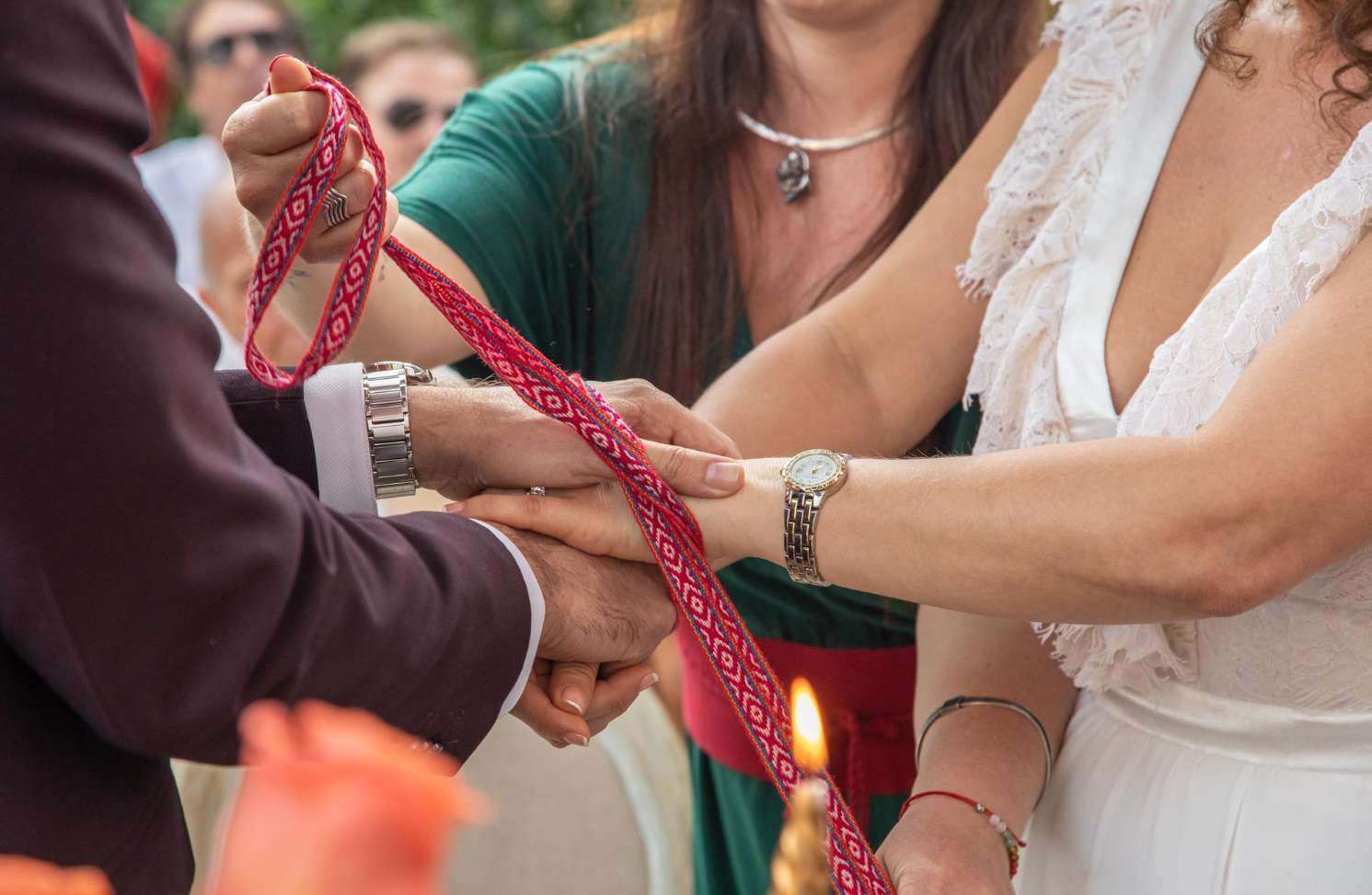
During the ritual, the couple typically stands face-to-face, holding hands. Some choose to hold both hands (left-to-left, right-to-right), while others cross their arms, clasping each other’s forearms. The key here is to ensure the binding feels comfortable and intimate, creating a sense of unity.
The cords or ribbons are then wrapped around the couple’s hands. In many cases, a celebrant or a loved one will perform this action, wrapping the cords in a figure-eight or infinity symbol — a powerful visual of eternal love. I’ve seen couples take it a step further, asking their parents or siblings to help tie the knot, bringing them into the ceremony in a deeply personal way.
The Vows And Knot Tying
The magic happens when the couple’s hands are bound, and vows are exchanged. You can either recite your legal vows during this time or share something more personal. One couple I worked with had a family member read a poem as they held hands, a lovely touch that added to the emotional depth of the moment.
At the end of the ceremony, the couple can either pull their hands apart to tighten the cord into a knot or leave it loosely bound as a keepsake. The image of their hands bound together, each knot symbolising their commitment, is something they can keep forever — a beautiful memento of their wedding day.
Personalising Your Handfasting Ceremony
Choosing Meaningful Materials For Your Handfasting Cord
One of the most beautiful aspects of a handfasting ceremony is how easily it can be personalised. The material you choose for the handfasting cord can carry special meaning, whether it reflects your family heritage, a shared passion, or your wedding theme.
Here are some ideas for personalising your handfasting cord:
- Family Heirlooms: Use a piece of fabric from your grandmother’s wedding dress, a family tartan, or even a ribbon from a special family event.
- Passionate Hobbies: If you and your partner share a love for a particular hobby, incorporate it into your ceremony. For example, you could use a climbing rope if you’re an avid hiker, or a fishing line if you share a love for the ocean.
- Nature-Inspired Materials: For couples who want a rustic or boho feel, natural materials like hemp twine, cotton, or vines can add an earthy, grounded element to your ceremony.
- Personal Fabrics: Consider using a fabric that is personally meaningful to you, such as a scarf from your first date or a piece of cloth from your honeymoon destination.
Each material choice not only adds beauty but also a layer of emotional depth to the ritual.
Symbolic Colours For Your Handfasting Cord
The colours you choose for your handfasting cord can carry significant meaning. Here’s a quick guide to help you pick the right colours:
| Colour | Meaning |
| Red | Passion, love, courage |
| Blue | Loyalty, trust, sincerity |
| Green | Growth, fertility, prosperity |
| White | Purity, peace, new beginnings |
| Gold/Yellow | Unity, wisdom, joy |
| Purple | Spirituality, healing |
By selecting a colour that reflects your shared values or aspirations, you not only make the handfasting ritual more personal but also imbue it with deeper meaning.
Involving Loved Ones In Your Handfasting Ceremony
Family Participation: A Beautiful Way To Involve Everyone
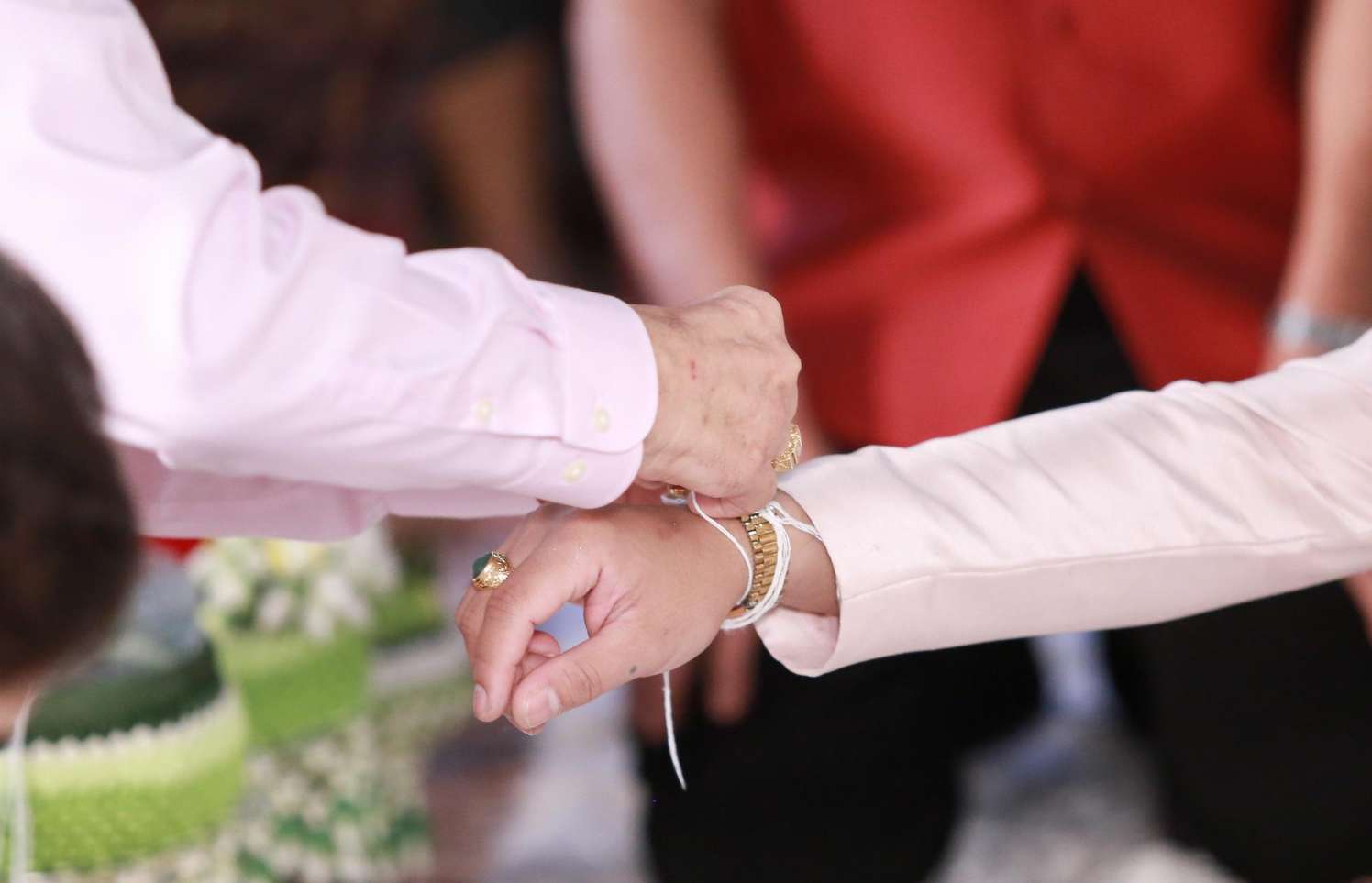
Incorporating family and friends into your handfasting ceremony can make it even more special. Instead of having just the celebrant perform the hand binding, you could ask your loved ones to participate in the ritual, creating a sense of community and shared commitment. Here’s how you can do it:
- Parents’ Blessing: Invite your parents or siblings to each place a cord over your hands, offering a blessing or well-wish for your union.
- Siblings or Close Friends: If you have a close relationship with your siblings or best friends, have them place cords and share meaningful words of encouragement.
- A Family Tartan: If you come from a Scottish background, using a family tartan or heirloom fabric is an excellent way to honour your heritage and involve your relatives in the ceremony.
Including Children In The Handfasting Ritual
For couples with children, having them contribute a cord is a beautiful way to symbolise the merging of families. Each child can place their cord on the binding, and you can encourage them to offer a small blessing or wish for the couple’s future. This not only makes the ritual more inclusive but also reinforces the sense of family unity.
Guest Participation: A Community Ritual
Another way to make your handfasting ceremony unique is by inviting your guests to participate. You can ask each guest to bring a ribbon or string to add to the handfasting cord. This creates a beautiful multi-coloured binding that represents the community’s love and support for your union.
If you want to take this idea a step further, consider setting up a small table at the entrance of your venue, where guests can pick a colour that resonates with them and write a wish or blessing on a card that can later be read during the ceremony.
Practical Tips For A Successful Handfasting Ceremony
Ideal Cord Length And Material Choices
A common question couples have is how long the handfasting cord should be. The ideal length generally falls between 1.5 to 2 meters (6 to 9 feet). This length allows enough material for a few wraps around your hands while leaving plenty of cord for draping or tying a knot.
When selecting the material, consider texture and durability. Here are some tips for choosing the right material:
- Cotton and Linen: Soft on the skin and sturdy enough to hold knots securely.
- Silk or Satin: While beautiful, these materials can be slippery, making it harder to keep the knot secure.
- Jute or Hemp: Perfect for rustic or boho-themed weddings, these natural fibres offer an earthy vibe.
It’s also important to consider the climate and setting of your ceremony. If you’re hosting a wedding outdoors, for example, you’ll want materials that can withstand wind or a touch of rain.
Displaying Your Handfasting Cord As A Keepsake
One of the beautiful aspects of handfasting is that it provides a tangible keepsake of your wedding. Many couples display their knotted cord in a shadow box or frame as a constant reminder of their vows and commitment. It’s a touching memento that can be displayed in your home, forever linking you to that special moment.
Here’s how you can display your handfasting cord:
- Shadow Box Display: Place the cord, along with other wedding mementos like your invitation or a photo, in a shadow box.
- Framing the Knot: You can also frame the cord with a photo of the ceremony to visually represent your unity.
- Wedding Album: Include a shot of the handfasting moment in your wedding album alongside the vows or meaningful messages.
Handfasting And Legal Considerations
Understanding The Legal Aspects Of Handfasting In Australia
While the handfasting ceremony is a powerful and symbolic ritual, it is important to remember that in Australia, it holds no legal standing. This means that while it can serve as a beautiful declaration of your love and commitment, it is not legally binding.
To be legally married, you must follow the official legal requirements set by the Australian Government. Here’s what you need to know:
- Notice of Intended Marriage (NOIM): This form must be lodged with your officiant at least one month before the wedding date.
- Officiant: Your wedding must be officiated by a licensed celebrant or religious minister.
- Marriage Certificate: After the ceremony, the celebrant will provide you with a marriage certificate, which is the official document that legally recognises your marriage.
Incorporating handfasting into your ceremony can certainly add depth and emotion, but don’t forget to complete the necessary legal paperwork to ensure your marriage is recognised under Australian law.
Incorporating handfasting into your wedding ceremony is an unforgettable way to symbolise your commitment and love for one another. Whether you’re drawn to its deep Celtic roots, looking to personalise your ceremony, or simply want to include loved ones in a meaningful way, handfasting offers a beautiful ritual that enhances any wedding.
I’ve seen handfasting ceremonies leave a lasting impression on guests, who often remark on the emotional connection between the couple. It’s a moment when love truly feels tangible — the act of binding your hands together in front of those who matter most adds a unique, profound element to the celebration.
Couples who embrace handfasting often reflect on the power of that moment for years to come. It’s a ritual that stays with you, reminding you of the promises made and the love that ties you together.