Over the years, I’ve noticed that wedding trends often start small. A stylist experiments with a new idea, a photographer shares a striking image, and suddenly couples across Melbourne are asking about it. That’s exactly what’s happening with serpentine table weddings.
These flowing, curved layouts are appearing everywhere from Yarra Valley vineyards to grand ballroom receptions. They look dramatic in photos, encourage conversation and transform the entire feel of a reception space. For many couples planning a 2026 wedding, the seating layout is becoming just as important as the flowers, menu or entertainment.
The Reception Layout Trend That’s Replacing Traditional Round Tables
For decades, wedding receptions followed a familiar formula. Round tables filled the room. Guests sat in neat groups. The dance floor occupied the centre, and everything else worked around it.
That approach still works well. In fact, many Melbourne venues continue to use it successfully every weekend.
Yet couples planning weddings in 2026 are looking for something a little different.
They want guests to walk into the room and immediately notice something memorable. They want the layout itself to become part of the experience rather than simply serving a practical purpose.
That’s where curved wedding tables come into the picture.
Why Couples Are Moving Away From Standard Reception Setups
One of the biggest shifts I’ve seen over the last few years is a move away from highly structured receptions.
Couples are spending less time worrying about traditions for tradition’s sake and more time asking questions like:
- How can guests interact more naturally?
- How can the room feel less formal?
- How can our reception look different from every wedding we’ve attended?
A serpentine table wedding answers all three.
Instead of placing guests at isolated round tables, curved layouts create a flowing arrangement that encourages conversation across larger sections of the room.
Think of it as breaking down invisible walls between guest groups.
At a recent wedding industry showcase in Melbourne’s eastern suburbs, I watched attendees naturally gather around a serpentine installation. People chatted across curves, moved freely and interacted with guests they may never have spoken to at a traditional setup. The layout seemed to do the heavy lifting.
As the old saying goes, sometimes it’s the little things that make all the difference.
What Makes a Serpentine Table Wedding Different?
Serpentine tables are modular tables shaped with gentle curves.
When combined, they can create:
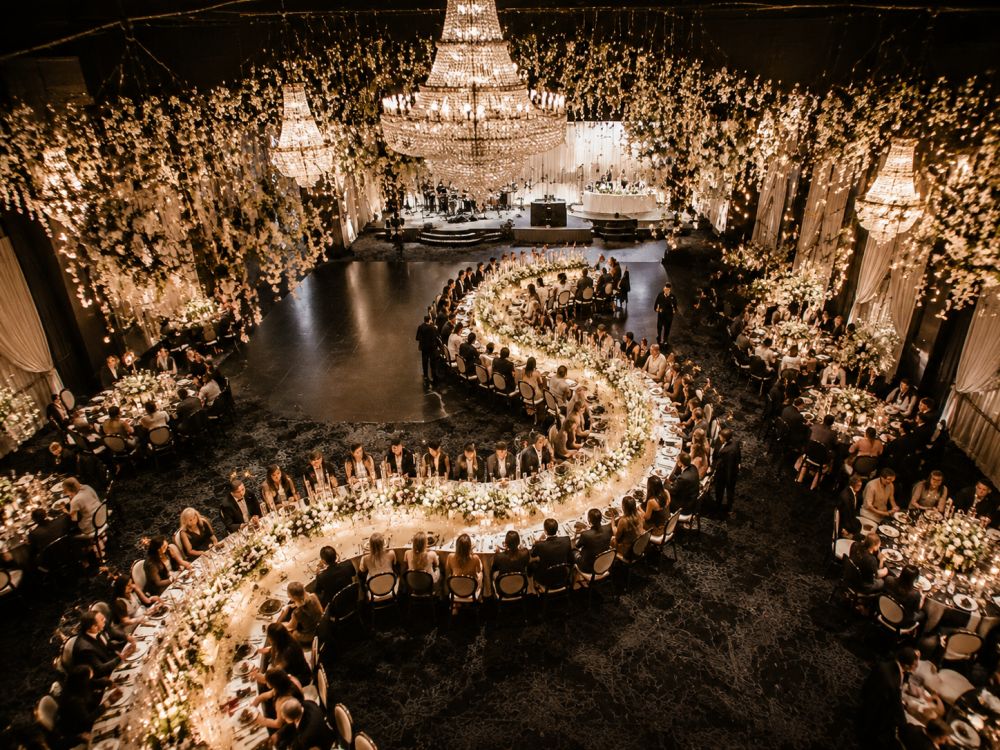
- Long S-shaped waves
- Sweeping arches
- Circular formations
- Snake-like pathways through a room
Unlike standard banquet tables that form straight lines, serpentine tables introduce movement.
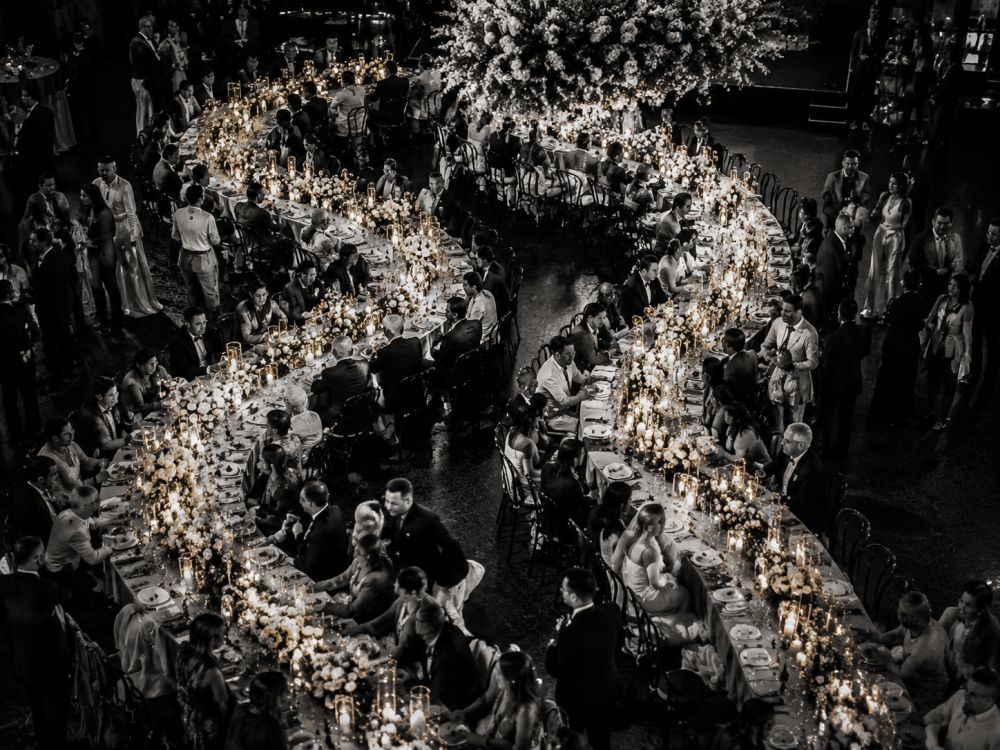
From above, the effect is striking.
The tables become a design feature rather than simply a place to eat dinner. Many wedding stylists now treat the reception layout as a centrepiece in its own right. “The floor plan is now one of the first styling decisions couples make, not the last.”
That statement would have sounded unusual ten years ago. Today, it’s becoming standard practice.
How Serpentine Tables Transform Guest Experience
One of the most common questions I get from couples is whether a reception layout really affects the atmosphere of the night.
The short answer is yes.
I’ve attended weddings where the room looked beautiful, but guests stayed within their own circles all evening. I’ve also seen receptions where conversations flowed naturally across the room. Often, the difference came down to the seating arrangement.
Serpentine tables are designed to bring people together in a way that traditional layouts sometimes struggle to achieve.
Creating Better Conversations Across the Room
Traditional round tables typically seat eight to ten guests. While that setup works well, it can create small islands throughout the room.
Guests often spend most of the evening talking to the same people seated beside them.
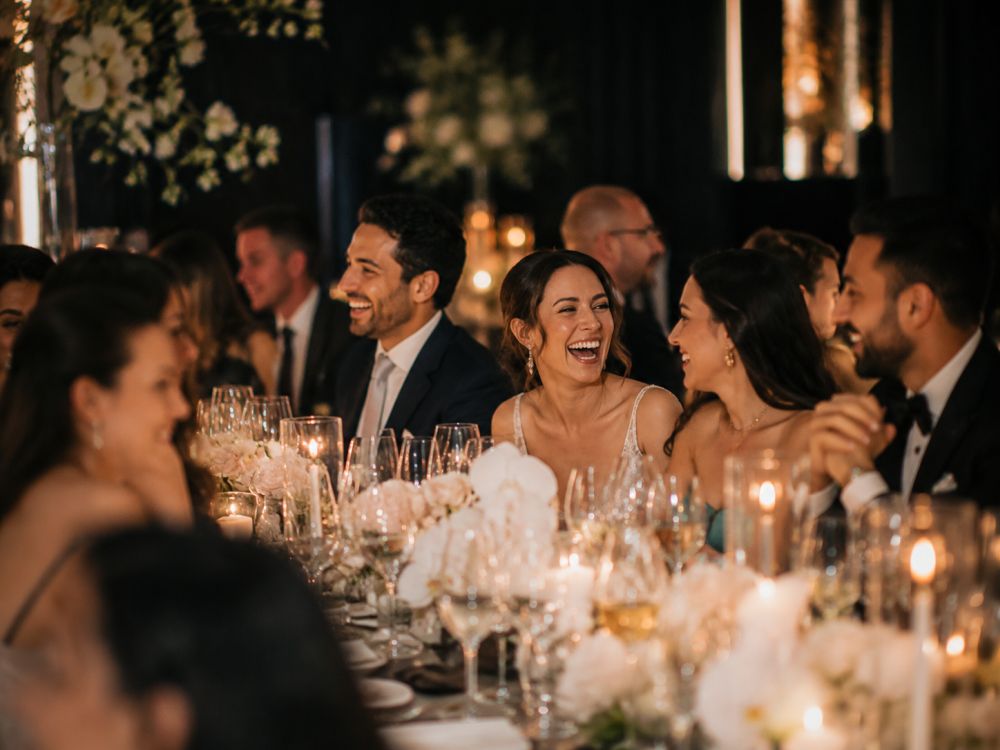
A serpentine table wedding creates a different dynamic. The gentle curves allow guests to face people from multiple directions. Rather than sitting in a fixed circle, they become part of a larger connected group.
This naturally creates what planners often call conversational pods.
Guests can easily interact with:
- Friends seated beside them
- Family members across the curve
- Other guests are a few seats away
- People joining conversations organically
At a wedding I attended in Melbourne’s south-east last year, the couple combined several curved table runs into a large wave pattern. By the end of dinner, guests who had never met before were sharing stories and planning catch-ups after the wedding.
That’s difficult to achieve when every group remains isolated at separate tables.
Why Guests Feel More Connected During the Reception
Modern weddings are increasingly focused on experience.
Couples want guests to feel involved rather than simply attending an event.
Curved wedding tables support this goal because they reduce physical barriers throughout the room.
The layout creates:
| Traditional Round Tables | Serpentine Tables |
| Separate guest groups | Connected seating zones |
| Limited interaction between tables | Easier cross-table conversations |
| Formal appearance | Relaxed atmosphere |
| Predictable layout | Unique visual flow |
The result often feels less structured and more social.
Guests move around more freely. Conversations expand naturally. The room feels connected rather than divided.
For multicultural weddings, which are common across Melbourne, this can be especially valuable.
I’ve worked with couples combining large Greek, Italian, Middle Eastern and Australian family groups. Seating arrangements can sometimes feel like solving a giant puzzle. Curved layouts often help bridge those gaps by creating a more communal atmosphere without forcing people into unfamiliar seating arrangements.
A Real Wedding Example: When the Seating Plan Became Part of the Celebration
A few months ago, I spoke with a couple planning a wedding for approximately 220 guests.
Initially, they wanted traditional rounds because that’s what they’d always seen at weddings.
After reviewing the floor plan, they experimented with a mixed layout featuring one large serpentine table wedding design through the centre of the room, surrounded by smaller family tables.
The difference was remarkable.
The central curve became a feature of the reception itself.
Guests stopped to take photos before dinner. Conversations started before the formalities even began. The layout guided people naturally through the space without feeling forced.
The bride later told me that several guests commented on the seating arrangement before mentioning the flowers or décor.
That’s a strong sign that the design made an impression.
Why Reception Layouts Matter More Than Ever
Wedding planning trends tend to reflect broader lifestyle changes.
Today’s couples are placing greater value on shared experiences.
They’re investing in:
- Interactive food stations
- Live entertainment
- Cocktail-style mingling spaces
- Personalised guest experiences
- Unique reception table configuration ideas Australia couples haven’t seen before
Serpentine tables fit neatly into that shift.
Rather than focusing purely on appearance, they influence how people experience the celebration itself.
As any experienced wedding planner will tell you, beautiful styling gets attention when guests walk into the room. A great layout influences how they feel for the next five hours.
And that’s what people remember.
Popular Serpentine Table Wedding Layouts for Different Venue Types
One reason serpentine tables have gained so much attention is their flexibility.
Unlike standard reception furniture, these tables can be arranged in several ways depending on the venue, guest count and overall wedding style.
I’ve seen the same tables create completely different experiences simply by changing the configuration.
The Classic S-Curve Layout
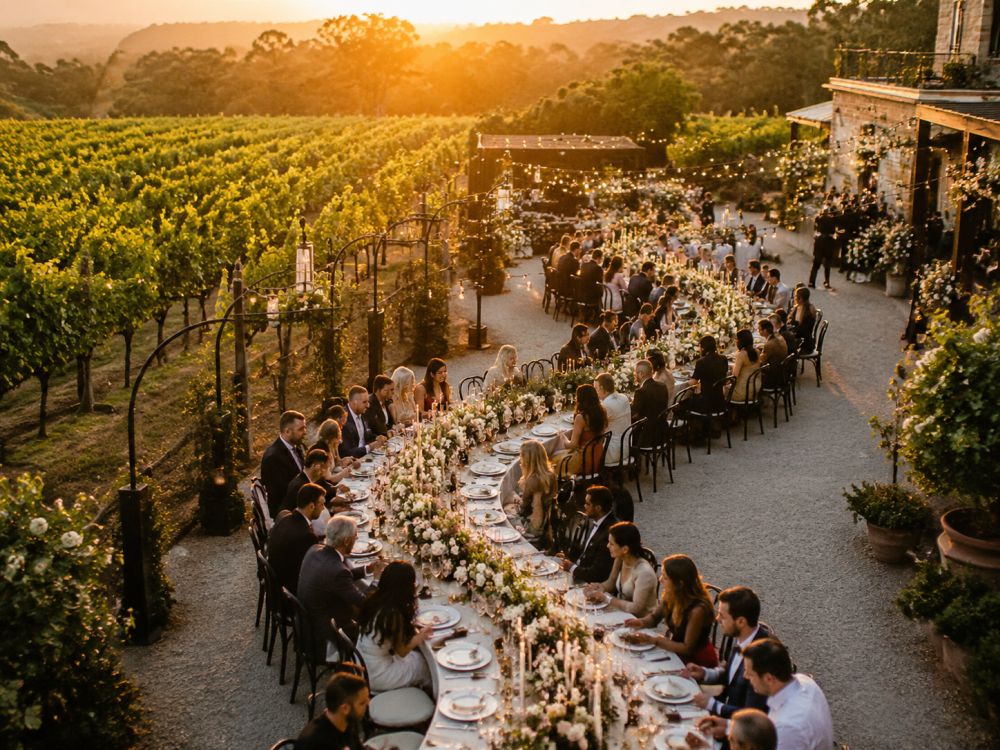
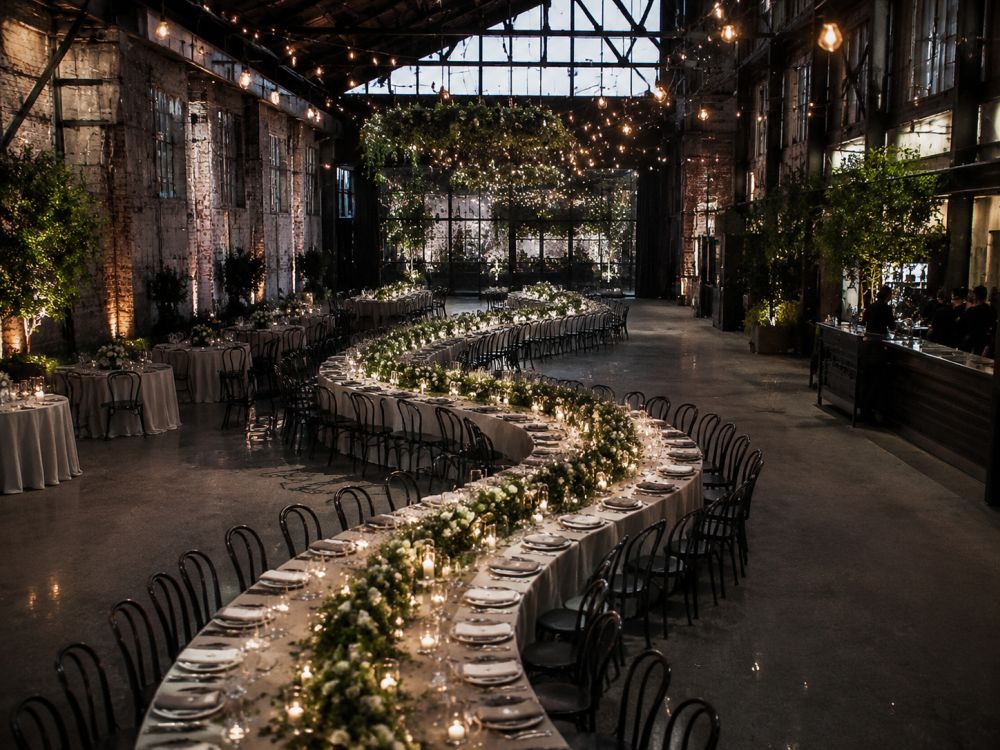
If you’ve seen photos of serpentine tables online, you’ve probably noticed the S-curve design.
This is the layout most couples picture when discussing a serpentine table wedding.
The tables weave through the room in a continuous flowing pattern, creating movement from one end of the reception to the other.
The S-curve works particularly well in:
- Ballrooms
- Marquees
- Winery venues
- Large function spaces
The shape draws guests into the room and creates a strong visual focal point.
It also photographs exceptionally well from balconies, mezzanines and drone perspectives.
At larger Melbourne receptions, I’ve seen planners position the curve so it leads directly towards the dance floor, helping connect different areas of the celebration.
The Circular Serpentine Configuration
Many couples don’t realise that four serpentine tables can form a complete circle.
This creates one of the most dramatic layouts available.
The open centre can be used for:
- Floral installations
- Hanging greenery
- Statement chandeliers
- Candle displays
- Decorative features
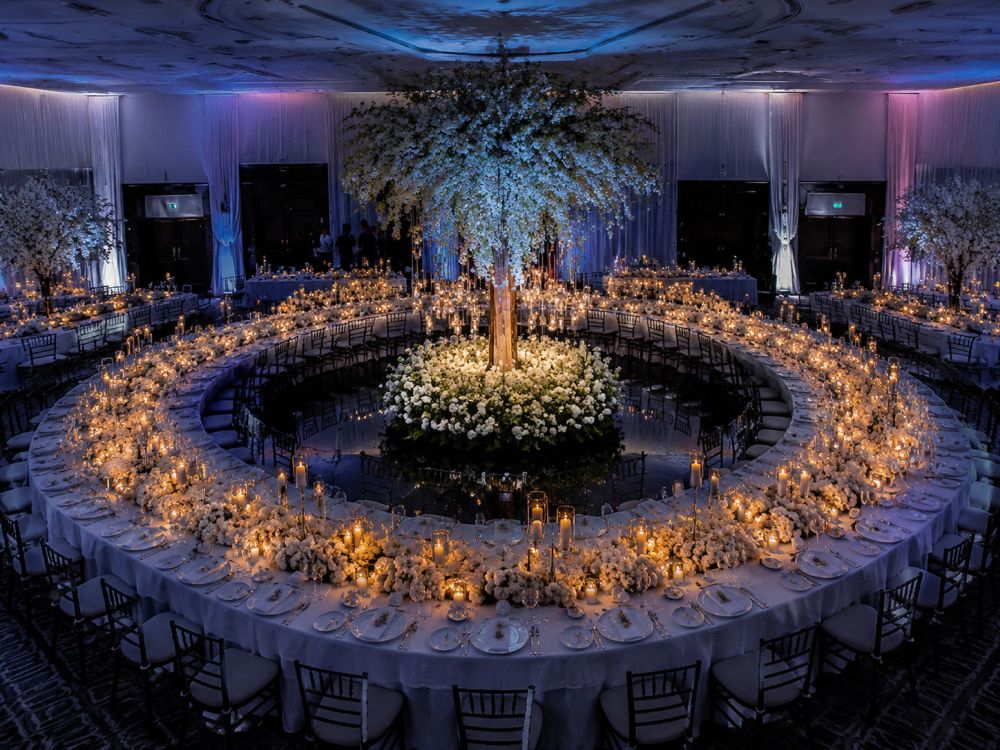
The design works best when guest numbers are moderate, and venue space is generous.
Because guests sit around the outside of the circle, the arrangement naturally encourages conversation and interaction.
Some planners even use multiple circles throughout a reception to create distinct social zones.
Mixing Curved Wedding Tables With Traditional Seating
In practice, many of the best reception designs don’t rely entirely on serpentine tables.
Instead, planners combine curved wedding tables with standard rounds or banquet tables.
This hybrid approach offers several advantages.
For example:
| Layout Element | Purpose |
| Serpentine tables | Create visual impact |
| Round tables | Seat family groups comfortably |
| Banquet tables | Maximise capacity |
| Cocktail furniture | Encourage mingling |
This approach is particularly effective for weddings with diverse guest groups.
Grandparents often appreciate traditional seating arrangements, while younger guests enjoy the social atmosphere created by curved layouts.
The result is often the best of both worlds.
Creative Feature Uses Beyond Guest Seating
Not every couple wants an entire reception built around serpentine tables. Fortunately, they can still enjoy the look without redesigning the whole floor plan. Some of the most creative uses I’ve seen include:
Bridal Party Tables
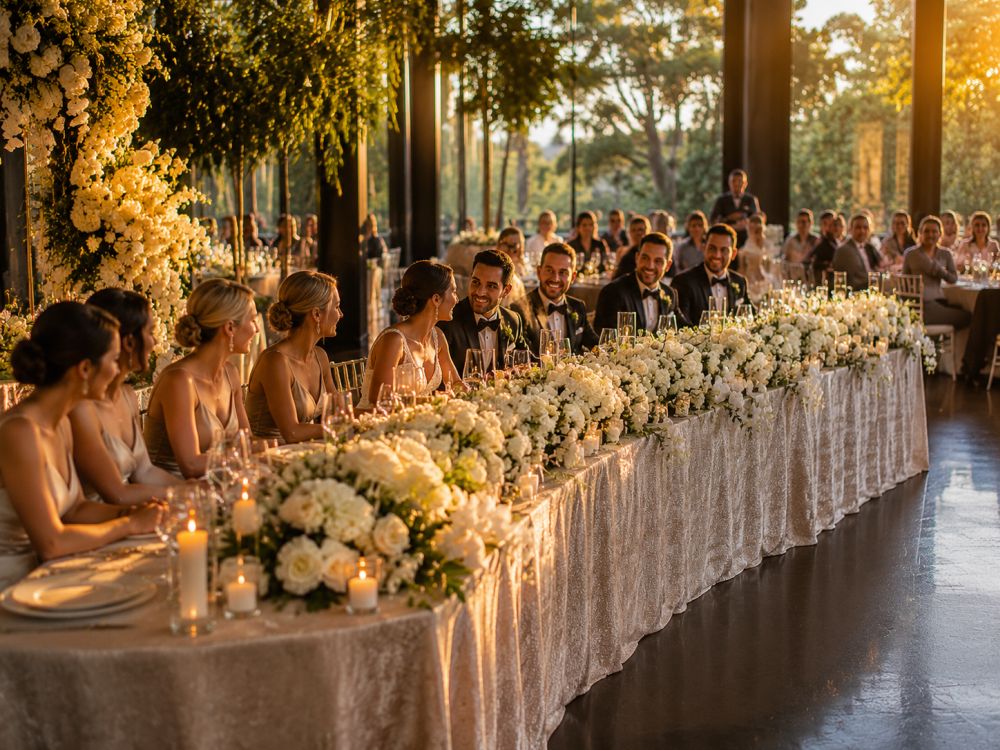
A curved bridal table immediately becomes a focal point. Rather than sitting in a straight line facing guests, the bridal party becomes more integrated into the room.
Dessert and Cake Displays
Curved tables create movement around display areas and help draw attention to wedding cakes, desserts and late-night food stations.
Escort Card Installations
Instead of using standard welcome tables, some couples use serpentine curves to display seating charts and guest cards. The shape encourages guests to move naturally through the display area.
Champagne Towers and Welcome Drinks
For cocktail receptions, the curve can guide guests through a welcome experience before entering the main reception space.
The Space Requirements Couples Often Underestimate
As beautiful as serpentine tables are, they aren’t suitable for every venue. This is where practical planning becomes important.
I’ve seen couples fall in love with a Pinterest photo only to discover their chosen venue simply doesn’t have enough room.
Before committing to any reception table configuration ideas Australia couples are seeing online, it’s worth understanding the space requirements.
How Much Room Do Curved Wedding Tables Need?
Curved layouts typically require more space than traditional seating arrangements.
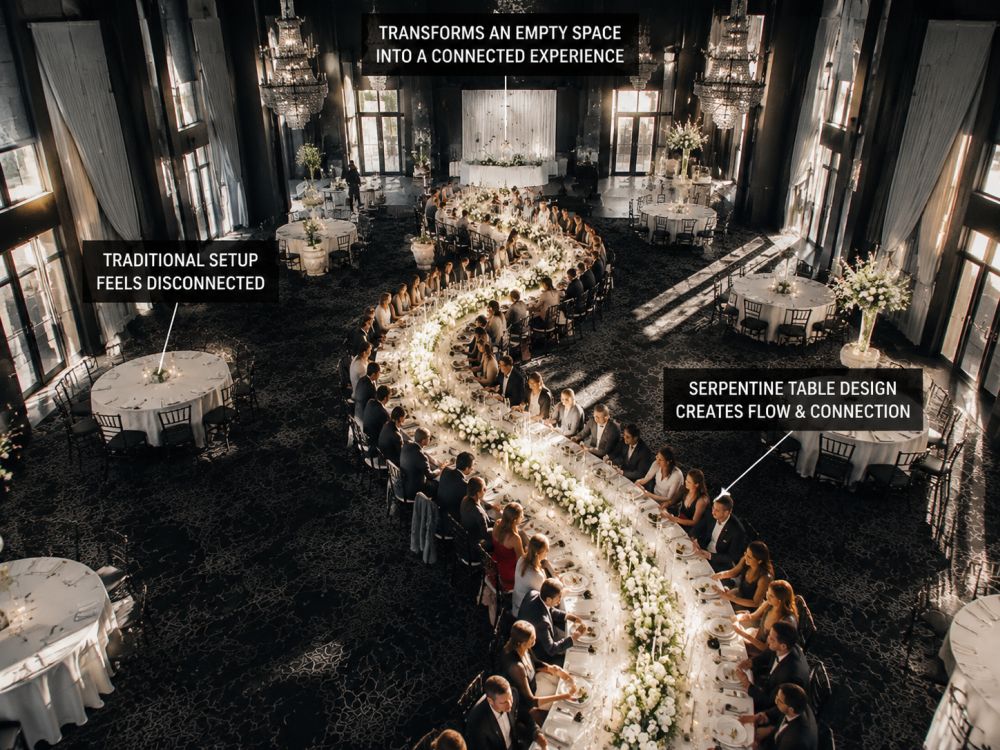
A comfortable setup often requires:
- 2.5 to 3 metres of overall width
- Sufficient chair clearance
- Service aisles for waitstaff
- Access to emergency exits
- Space around dance floors and entertainment areas
The curves themselves aren’t usually the problem.
It’s the circulation space around them that adds to the footprint.
Guests need room to sit comfortably, stand, move and interact without feeling cramped.
Why Venue Size Matters More Than You Think
When couples tour venues, they often focus on appearance first. The chandelier. The styling. The view. What they sometimes overlook is usable floor space.
A ballroom capable of holding 250 guests may comfortably accommodate that number using round tables, but capacity can change once curved layouts are introduced.
Before locking in a design, ask your venue coordinator for:
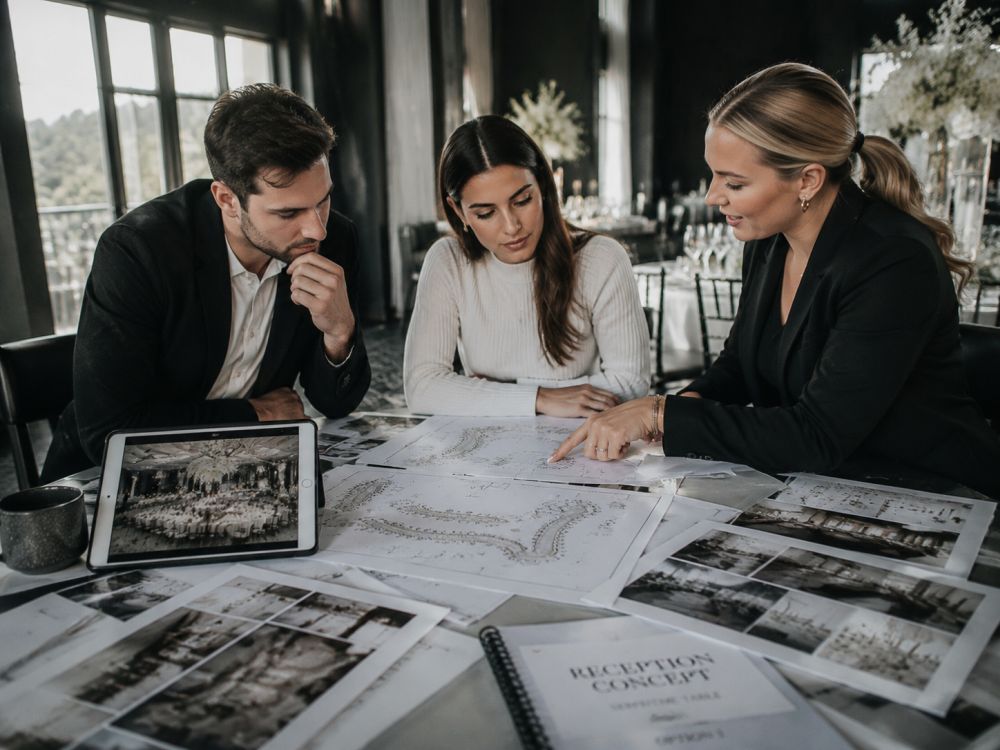
- Detailed floor plans
- Seating mock-ups
- Capacity estimates
- Service pathway recommendations
Most experienced venues can quickly determine whether the layout will work.
Reception Layout Planning Checklist
Before confirming a serpentine table wedding design, check the following:
- Venue dimensions have been measured
- Guest numbers are finalised
- The dance floor location is confirmed
- Entertainment setup is planned
- Catering access routes are clear
- Linen requirements are priced
- Table hire availability is confirmed
- Emergency exits remain accessible
Spending an extra week reviewing these details can save months of frustration later.
As the saying goes, measure twice and cut once. The same principle applies to wedding floor plans.
Styling Curved Wedding Tables Without Overcrowding Them
One mistake I occasionally see with serpentine tables is overstyling. Because the shape itself is already a visual feature, adding too many decorations can make the table feel cluttered rather than elegant. The most successful designs usually follow a simple rule: let the curves do the talking.
Let the Shape Do the Heavy Lifting
Traditional tables often rely on large centrepieces to create impact. A serpentine table wedding already has built-in visual interest. That means you can often scale back other styling elements and still achieve a premium look.
I recently attended a wedding where the couple used nothing more than candles, bud vases and soft greenery running along the curve. The result looked far more sophisticated than many heavily decorated receptions I’ve seen.
Sometimes less really is more.
Floral Designs That Follow the Flow
The best floral arrangements work with the shape of the table rather than against it.
Popular choices include:
- Continuous greenery runners
- Low floral garlands
- Bud vase collections
- Seasonal native flowers
- Mixed candle arrangements
For Melbourne weddings, I often see couples incorporating locally sourced blooms depending on the season.
Spring weddings may feature sweet peas and roses, while autumn celebrations often include richer textures and deeper colours that complement vineyard venues throughout regional Victoria.
The goal is to create one uninterrupted visual line that guides the eye along the table.
Lighting Techniques That Highlight the Curves
Lighting can elevate a serpentine layout dramatically. Rather than focusing solely on table décor, many stylists now design overhead installations that mirror the table’s shape.
Popular options include:
- Hanging greenery
- Edison bulb installations
- Bistro lighting
- Suspended floral features
- Statement chandeliers
When viewed after sunset, these layered elements create depth and help define the flow of the room.
Linen Choices That Actually Work
Linens are often one of the most overlooked aspects of serpentine table planning. Standard tablecloths can work, but they frequently bunch, fold and pool around the curves.
Many couples choose:
- Custom-made linens
- Layered runners
- Textured fabrics
- Natural linen finishes
While this can increase costs, it often delivers a cleaner and more polished result.
What Most Wedding Blogs Don’t Tell You About Serpentine Tables
Social media tends to focus on the beautiful finished product. What you don’t always see are the practical conversations happening behind the scenes.
The Catering Challenges You Need to Discuss Early
Curves can occasionally create service challenges. This becomes particularly important if you’re planning family-style dining. Large serving platters, centrepieces and curved table sections can compete for space.
Before finalising your layout, discuss:
- Serving style
- Plate service requirements
- Centrepiece dimensions
- Staff access pathways
Experienced venues will already understand these considerations and can recommend solutions before problems arise.
Hidden Costs Couples Should Budget For
Like many wedding trends, serpentine tables often come with additional expenses.
Potential costs include:
- Specialty table hire
- Custom linen production
- Additional delivery fees
- Extra styling requirements
- Installation labour
These costs aren’t necessarily deal-breakers, but they should be factored into your budget from the beginning.
Sightline Problems and How to Avoid Them
One challenge that receives little attention is visibility.
Depending on the curve, some guests may struggle to see:
- Speeches
- First dances
- Entertainment
- Cake cutting moments
That’s why thoughtful seating plans remain important. Before approving a floor plan, review sightlines from every section of the room.
A layout should look impressive while still allowing guests to enjoy the key moments of the celebration. “The best reception layouts balance style and function. Guests should notice the design without it getting in the way of the experience.”
Is a Serpentine Table Wedding Right for Your Reception?
Like any wedding trend, serpentine tables aren’t the perfect fit for every celebration. They work best when the venue, guest count and overall vision align.
A serpentine table wedding is often ideal for couples who:
- Want a modern reception design
- Love editorial-style wedding photography
- Have flexible venue space
- Want guests to interact more naturally
- Prefer unique wedding table layout ideas
Traditional layouts may still be the better choice for smaller venues, tighter budgets or receptions with limited floor space. The key is choosing a layout that supports your celebration rather than following a trend simply because it’s popular.
After more than two decades in Melbourne weddings, I’ve learned that the most successful receptions aren’t always the most extravagant. They’re the ones where every decision works together to create a memorable guest experience.
For many couples planning a 2026 celebration, curved wedding tables may be one of those decisions. They create movement, encourage connection and bring something genuinely different to the reception space.
And judging by how quickly they’re appearing at venues across Melbourne, I suspect this trend is only getting started.